

Araya Rasdjarmrearnsook (Artist Archive)
Artist(s)
Araya Rasdjarmrearnsook
Curator
Kittima Chareeprasit / Nutdanai Songsriwilai


 copied
PART 1 - The Same Old Karma: To give new meaning to the old views, one may have to face the same old karma. Curated by Kittima Chareeprasit
PART 2 - Textually: Perhaps it would be Araya textually; if not, then it must be… Some fragments of the days to come. Curated by Earth Songsriwilai
Part One
Araya Rasdjarmrearnsook: The Same Old Karma
Curated by: Kittima Chareeprasit
Co-organised with: MAIIAM Contemporary Art Museum, Chiang Mai
Part One: 16 October 2025 – 18 January 2026
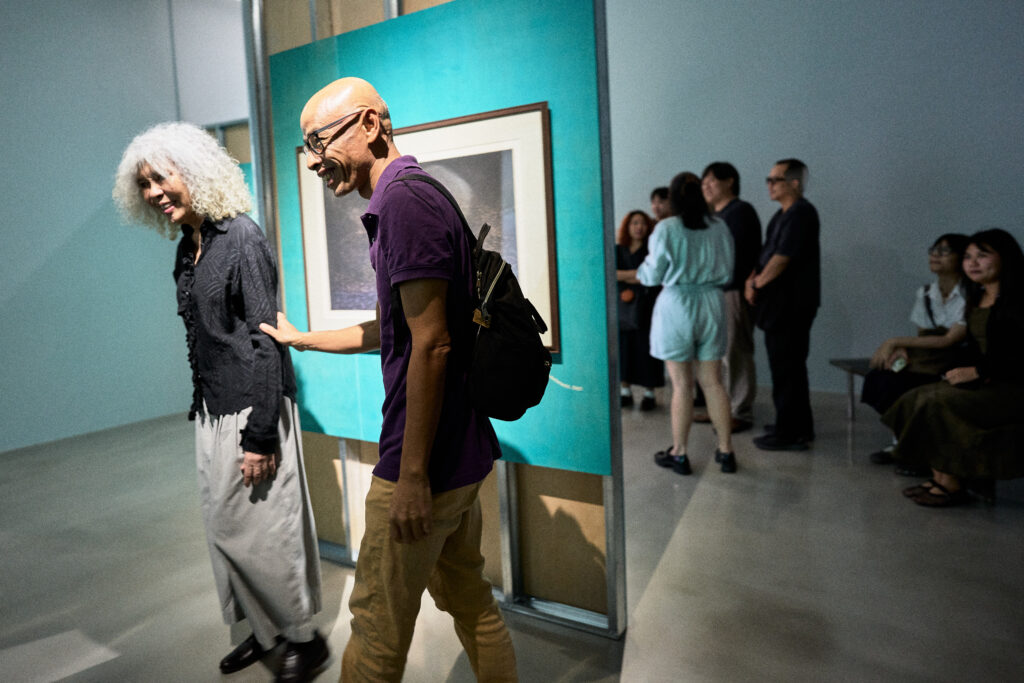
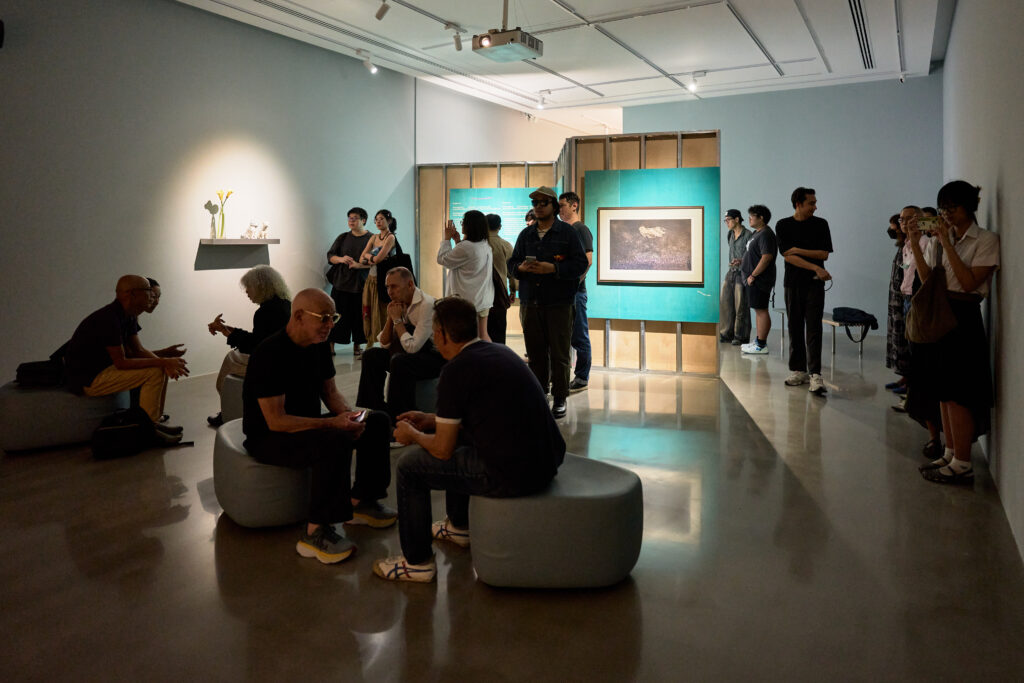
In conjunction with Araya Rasdjarmrearnsook: The Bouquet and the Wreath, unfolding at MAIIAM Contemporary Art Museum and Jameel Art Centre, Dubai, 100 Tonson Foundation presents a parallel exhibition titled Araya Rasdjarmrearnsook: the Same Old Karma, co-organised with MAIIAM. Together, these exhibitions revisit and reflect on nearly five decades of Araya Rasdjarmrearnsook’s artistic practice—one that persistently intertwines life, death, art, and writing into a singular, inseparable continuum.
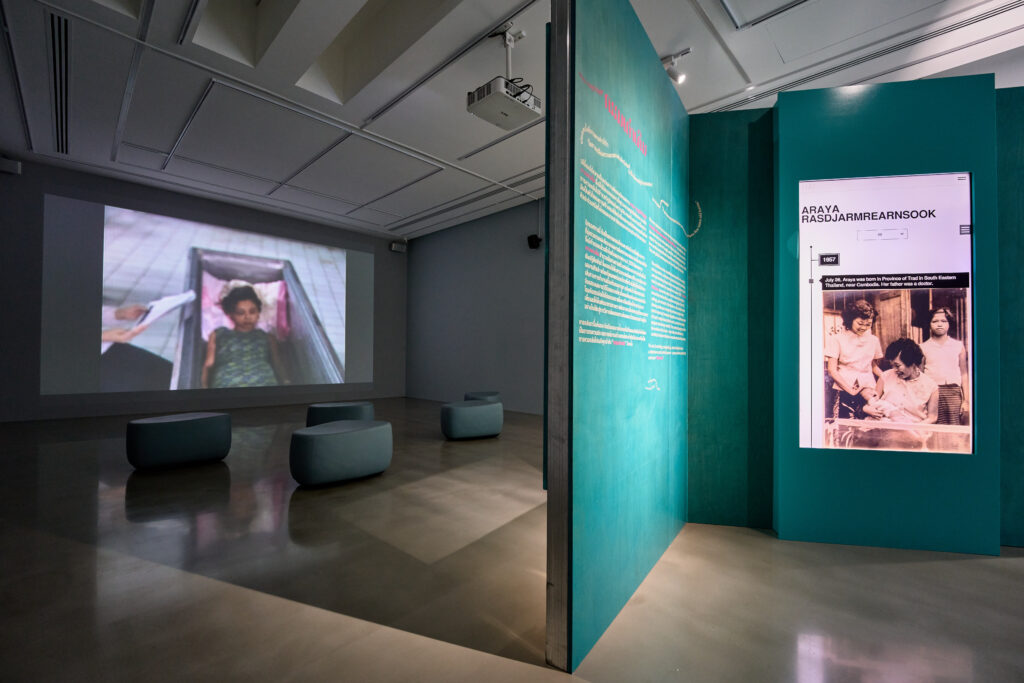
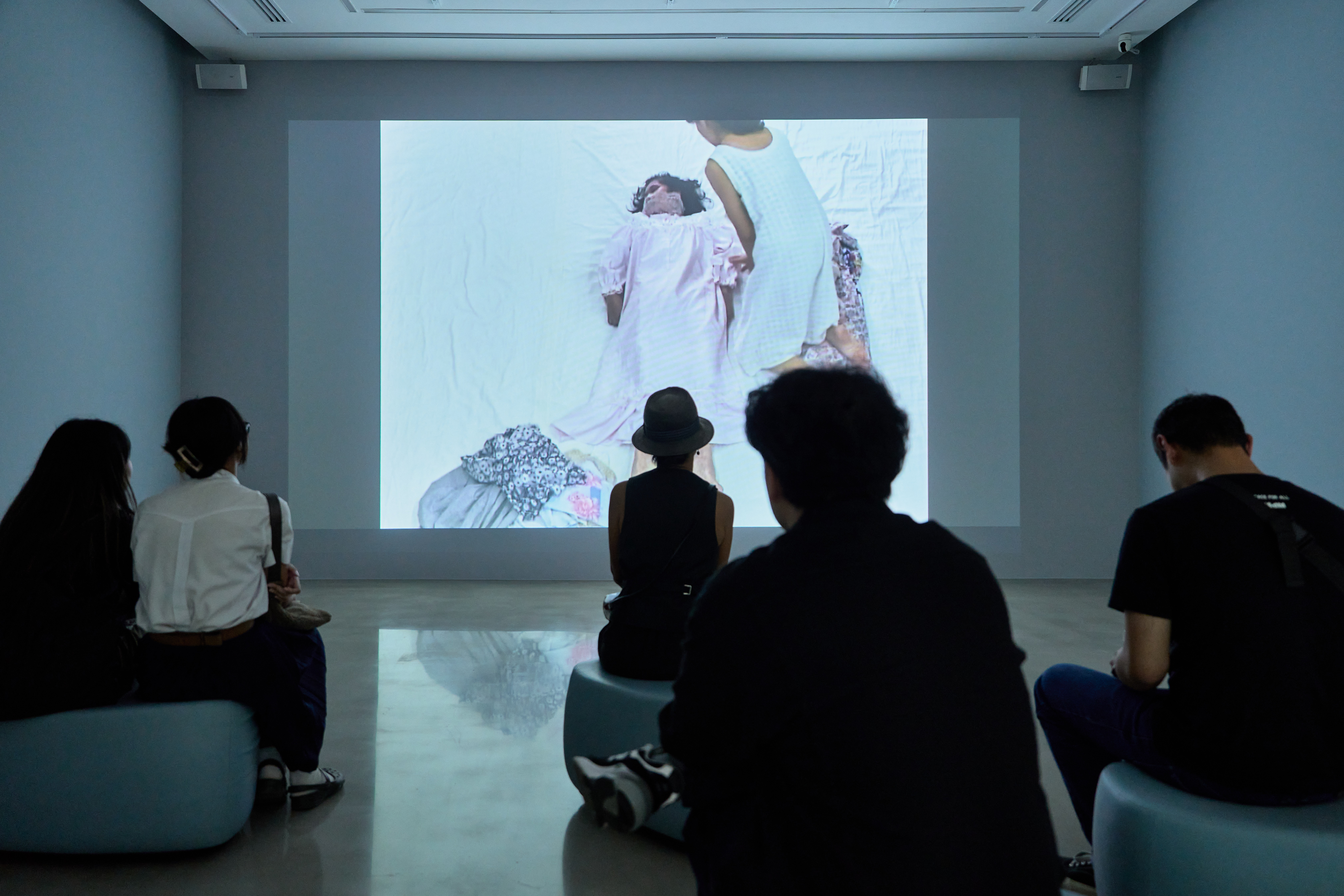
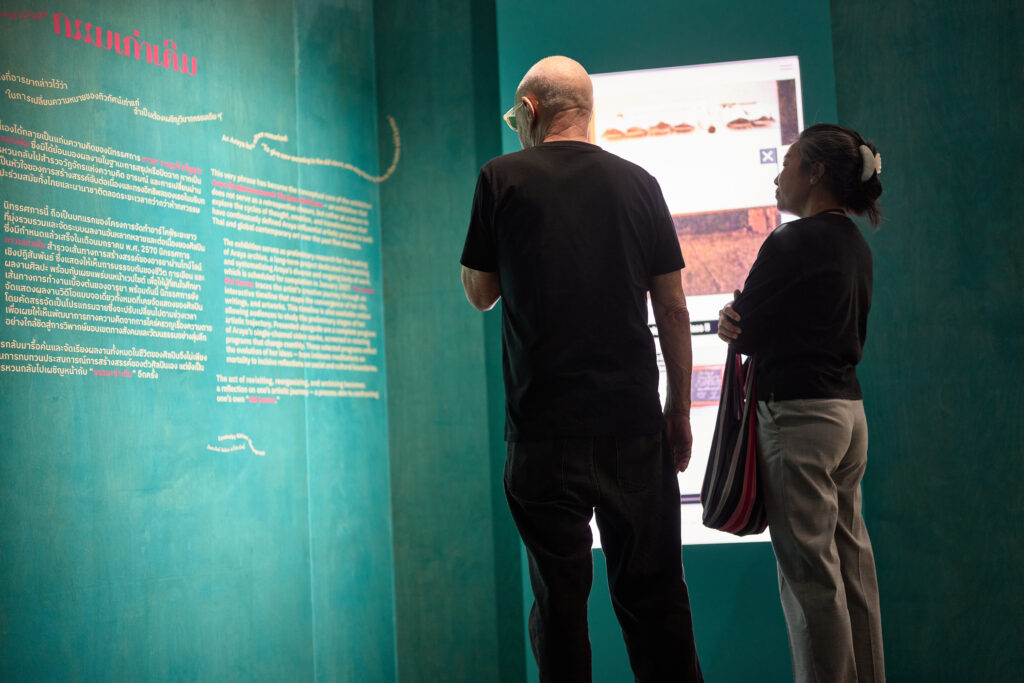
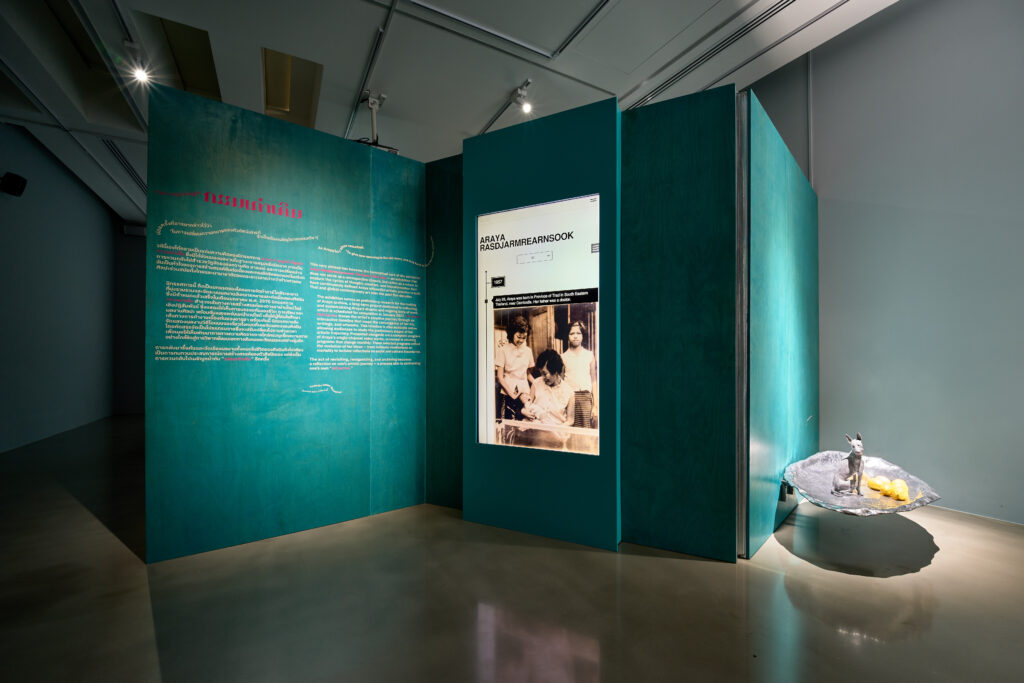
At the Foundation, Araya Rasdjarmrearnsook: the Same Old Karma marks the first chapter of an ongoing archival project devoted to consolidating the artist’s extensive body of work. This exhibition attempts to trace the trajectory of Araya’s long practice through an interactive timeline that maps the convergence of her life, writings, and artworks. Presented alongside are all her single-channel video works, revealing the evolution of her thinking—from intimate meditations on mortality to incisive reflections on social and cultural boundaries.
The exhibition serves as preliminary research for the making of Araya archive, a long-term collaborative project currently in progress and scheduled for completion in January 2027. The second chapter, titled Araya Rasdjarmrearnsook: Texturally, will focus on Araya’s text-based practice, exploring her essays, lectures, and literary writings that have profoundly reflected her artistic worldview.
---
As Araya has often remarked:
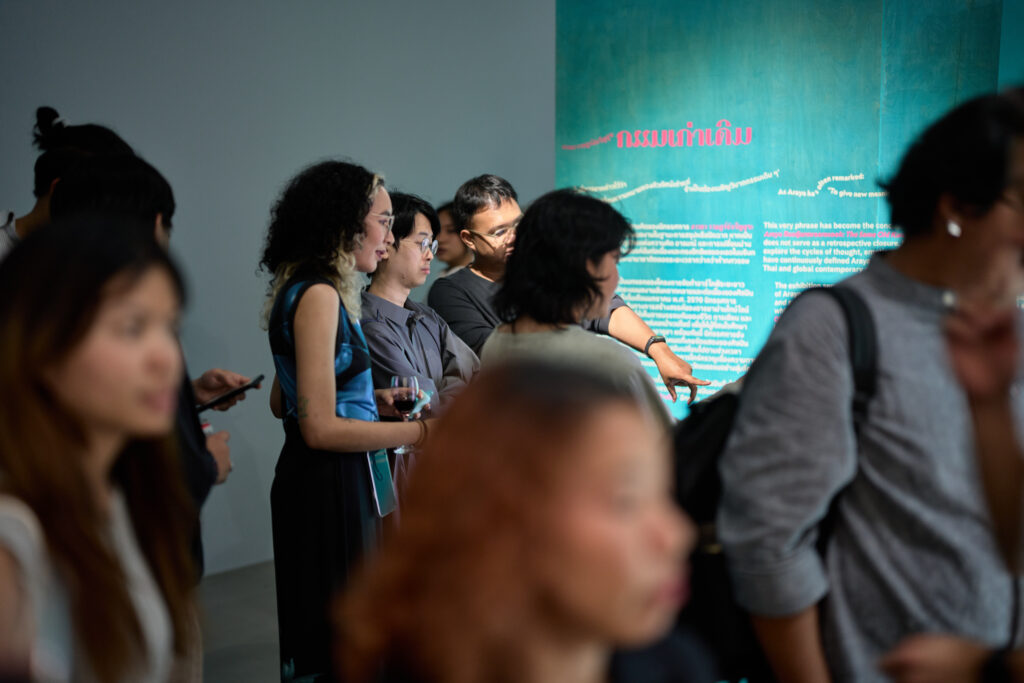
“To give new meaning to the old views, one may have to face the same old karma.”
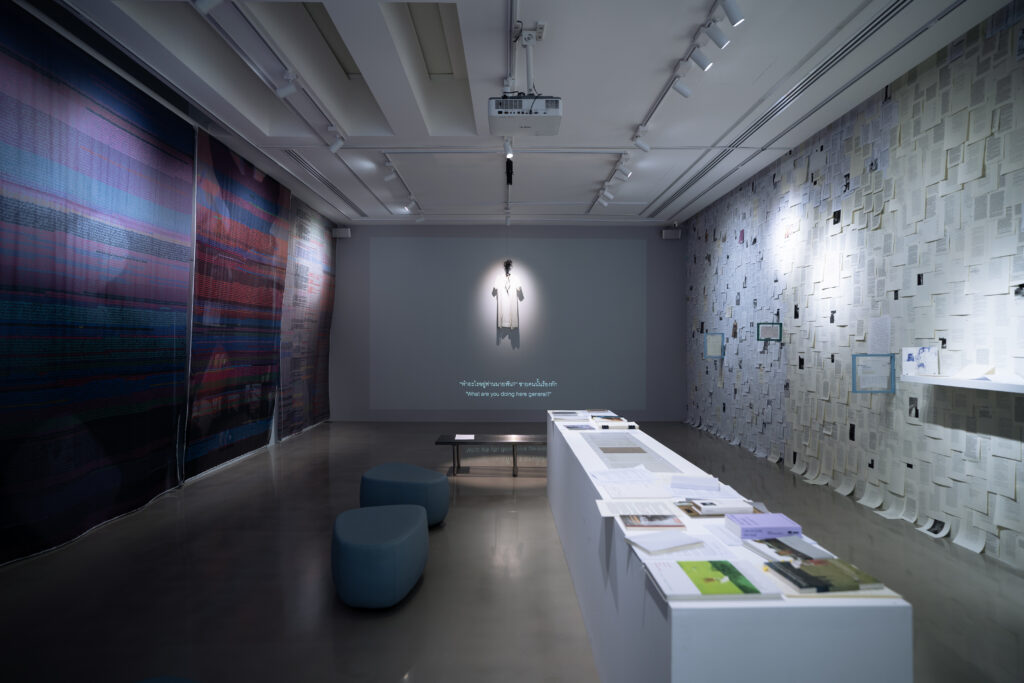
This exhibition looks back on her work not as a retrospective closure but as a renewed encounter with the cycles of thought, emotion, and transformation that define her enduring contribution to Thai and global contemporary art. The exhibition title, Same Old Karma, is inspired by her recent multi-channel video installation The Same Old Karma Landscape at MAIIAM Contemporary Art Museum that comprises mostly footage from Araya’s earlier video artworks, dating back nearly three decades. Images and sounds are altered and reworked into a cacophony that oscillates between coherence and chaos. Revisiting and re-editing old footage to create a new work becomes a reflection on one’s artistic journey — a process akin to confronting one’s own “old karma.”
Part Two
Araya Rasdjarmrearnsook: Textually
Curated by Nutdanai Songsriwilai
Part Two: 21 February 2026 – 31 May 2026
‘To give new meaning to the old views, one may have to face the same old karma.’
Beginning with the first chapter, 100 Tonson Foundation presented “Araya Rasdjarmrearnsook: The Old Same Karma,” co-organised with MAIIAM Contemporary Art Museum, and launched an online archive gathering nearly half a century of artistic works by Araya Rasdjarmrearnsook. Presented alongside were all her single-channel video works, marking the start of an ongoing archival project devoted to consolidating the artist’s extensive body of work. Continuing this trajectory, the second chapter, “Araya Rasdjarmrearnsook: Textually,” invites viewers to read Araya’s paradigm in her capacity as an author, as a writer—venturing into a landscape of letters dense with dialogues between Image and Utterance, Script and Remembrance, Experience and Taste of literature, Art and Words.
‘The novel of art, when art fills the novel, when death fills life.’
In 2017, 100 Tonson Gallery conceived, in collaboration with Araya Rasdjarmrearnsook, the exhibition “An Artist is Trying to Return to 'Being a Writer’”, foregrounding her liminal stance between the role of “writer” and that of “artist.” Revisiting this gesture, “Textually,” is not only a continuation of Old Karma, but also a sequel to the 2017 exhibition that embodied the gesture of “Trying to,” by unfolding writings long completed in the past, unfastening them, and stitching them into outlines and notes she inscribed in the midst of working. At the opposite side of the room, the gesture of “Return to 'Being a Writer’” is made explicit through “another unfinished writing outlined as a novel, stiff and unyielding, halted entirely upon encountering a scene too beautiful to proceed.” These two currents are woven together with video works that carry her words in the voice of “An Artist,” drawing attention to Araya’s orthographic process—her insistence upon words, upon phrases, upon narration and text—reflecting her perspectives on memory, on dogs, on life, on death, and on art from another angle.
‘The beauty of a landscape resides in its melancholy.’
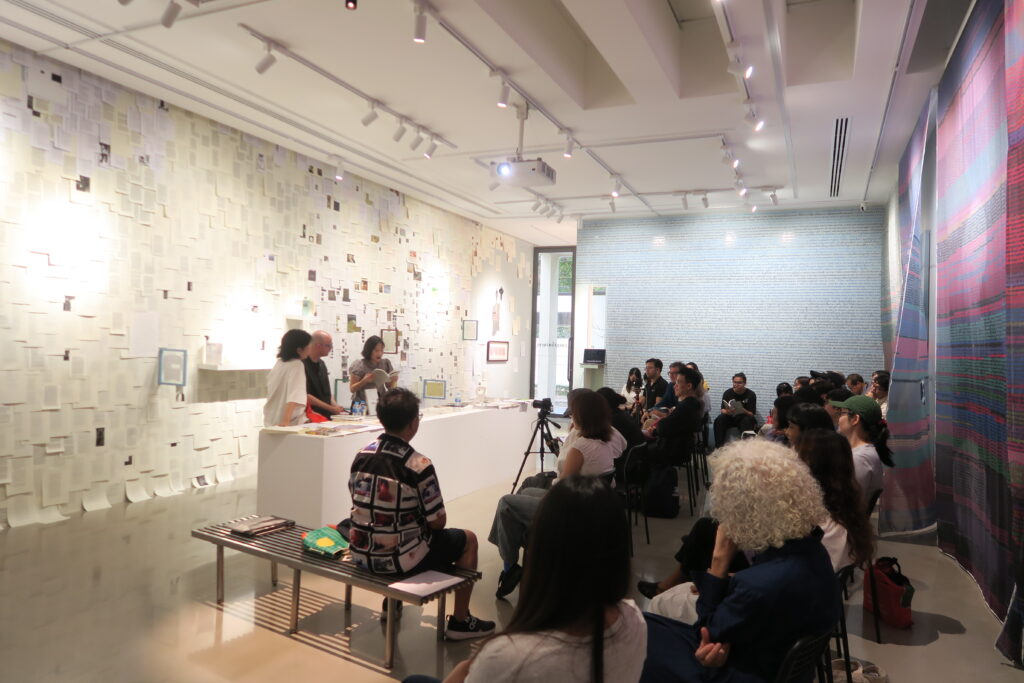
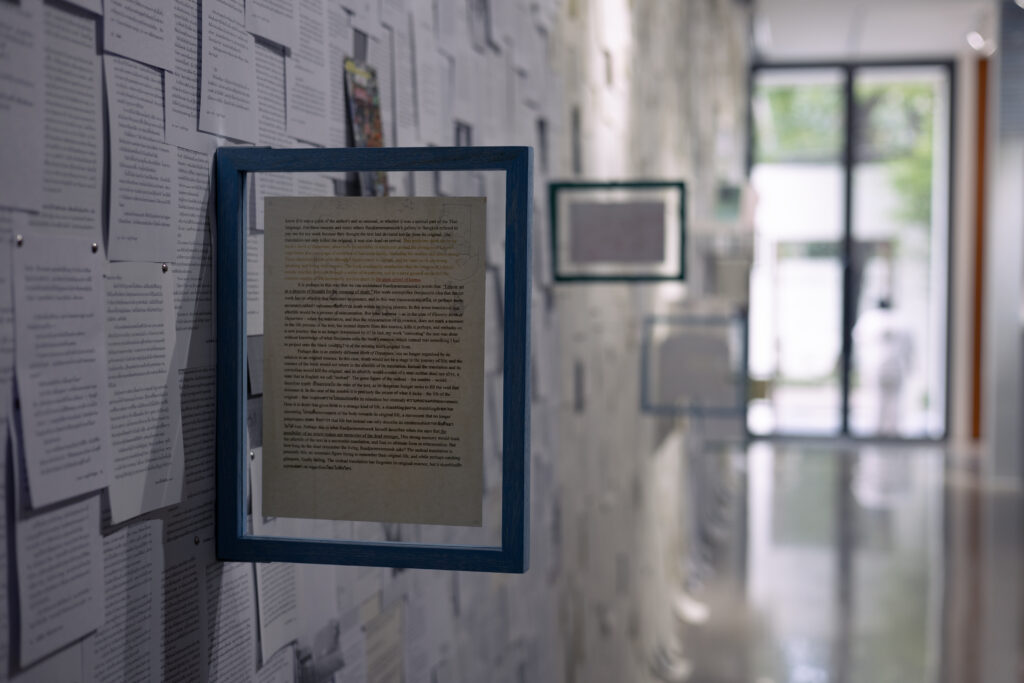
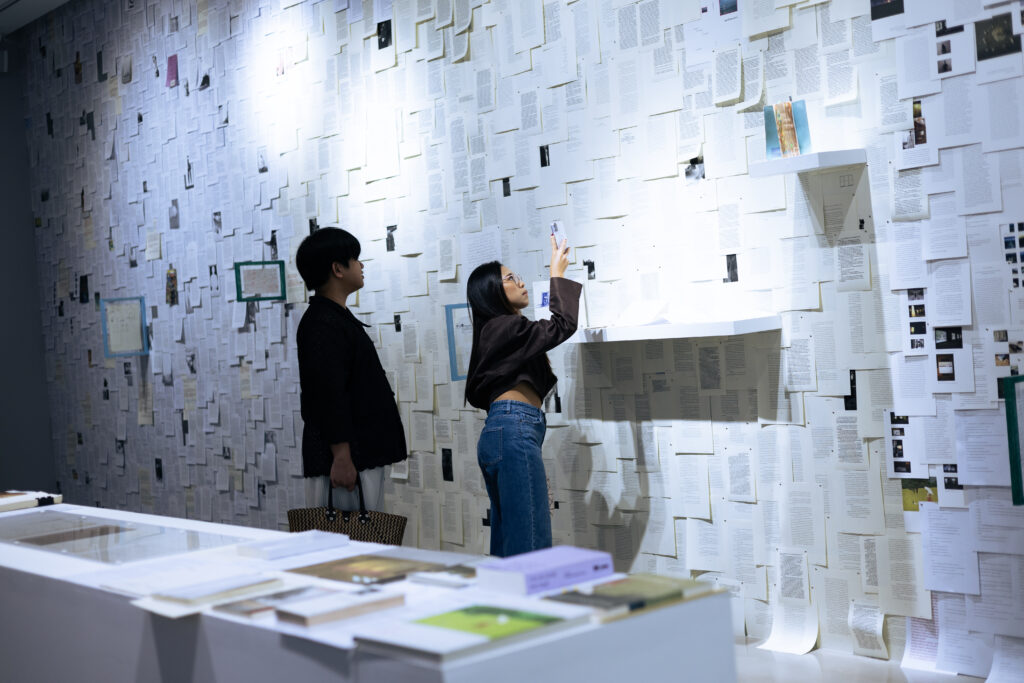
This exhibition also arose from conversations and guidance offered by Sayan Daengklom—lecturer, critic, scholar, and Araya’s “friend who was an Art historian.” Sharing a mutual interest in the trajectories of art, word, and literature, Sayan and Araya, together with 100 Tonson Foundation, invited over forty collaborators, scholars, curators, artists, and devoted readers of her prose to contribute passages of her words that continue to echo, prod, linger, or remain lodged in their memory. These fragments were rearranged into something akin to an unpolished long short story composed of her own words—an act of gathering and underscoring certain luminous facets of Araya’s selection of vocabulary and meaning.
‘…yet one hopes that the bruise from rereading will lead to some fragments of the days to come.’
Araya had pinned a long-form, prolonged drama of letters as:
“The intermittent overlapping of time, of memory, of recollection, accumulates with the weight of thought and sentiment, weaving into words, into phrases, into sentences, pressing, circling, pausing, and morphing. A compound states that the controller is both absorbed within the mass and, at the same time, steps aside, glancing obliquely from a corner that has shifted greatly or just slightly. At times it seems repetition, at times a sudden reemergence, as though one passage were superimposed upon a paragraph left unfinished, while a voice from another word resonates faintly from afar (perhaps from the upper corner of an emptied wall), and then slowly draws nearer, as if magnifying letters, which blend and merge due to the space — the place that refuses displacement—and due to time of coexistence. And then we aloof as though the entirety were engraved elsewhere — within the site of exhibition. The visitors approach, lean in to read, and suddenly some words loom larger, pushing the arc of perception aside...”
Araya Rasdjarmrearnsook: the Same Old Karma has been made possible through the support and contributions of Araya Rasdjarmrearnsook, Roger Nelson, Ek-Anong Phanachet, Lalita Singkhampuk, Bongkochakron Kampuk, Setapa Prom, Chanutphon Thongsin, Techin Rungwattanasophol, Koshaporn Wongsawanichakorn, Nutwara Thaiprayoon, Time Chotivilaivanit, Suteera Bootaranark, Nutdanai Songsriwilai, Supernormal Studio, and Waiting You Curator Lab.
About the artist
Araya Rasdjarmrearnsook (b. 1957, Thailand; based in Chiang Mai) is an artist, writer, and professor, and one of Southeast Asia’s most respected contemporary practitioners. She has been exhibiting internationally for 45 years, including at documenta, the Carnegie International, and biennales in Venice, Johannesburg, Sydney, Istanbul, Bangkok, Jakarta, Gwangju, Singapore, and beyond. Her works are held in collections including the Solomon R. Guggenheim Museum, New York; M+, Hong Kong; and major museums in Singapore, Australia, Japan, Finland, the Netherlands, the United States, Thailand, and beyond. Important smaller surveys of her work have been presented at SculptureCenter, New York (2015) and 4A Centre for Contemporary Asian Art, Sydney (2014). Araya has also played a major role innovating arts education in Thailand, where she established the country’s first interdisciplinary art school curricula. At her home and studio in Chiang Mai, she cares for dozens of stray dogs, who often appear in her artworks.
Back to main exhibitions